“Go out and look at any landscape...there is a sentiment, a feeling, which pervades the whole—you may call it the poetry of nature if you like—something which you cannot see, which is not material, and yet is as much a part of the landscape as the trees and grass themselves.” – William Preston Phelps, artist (1848-1923).
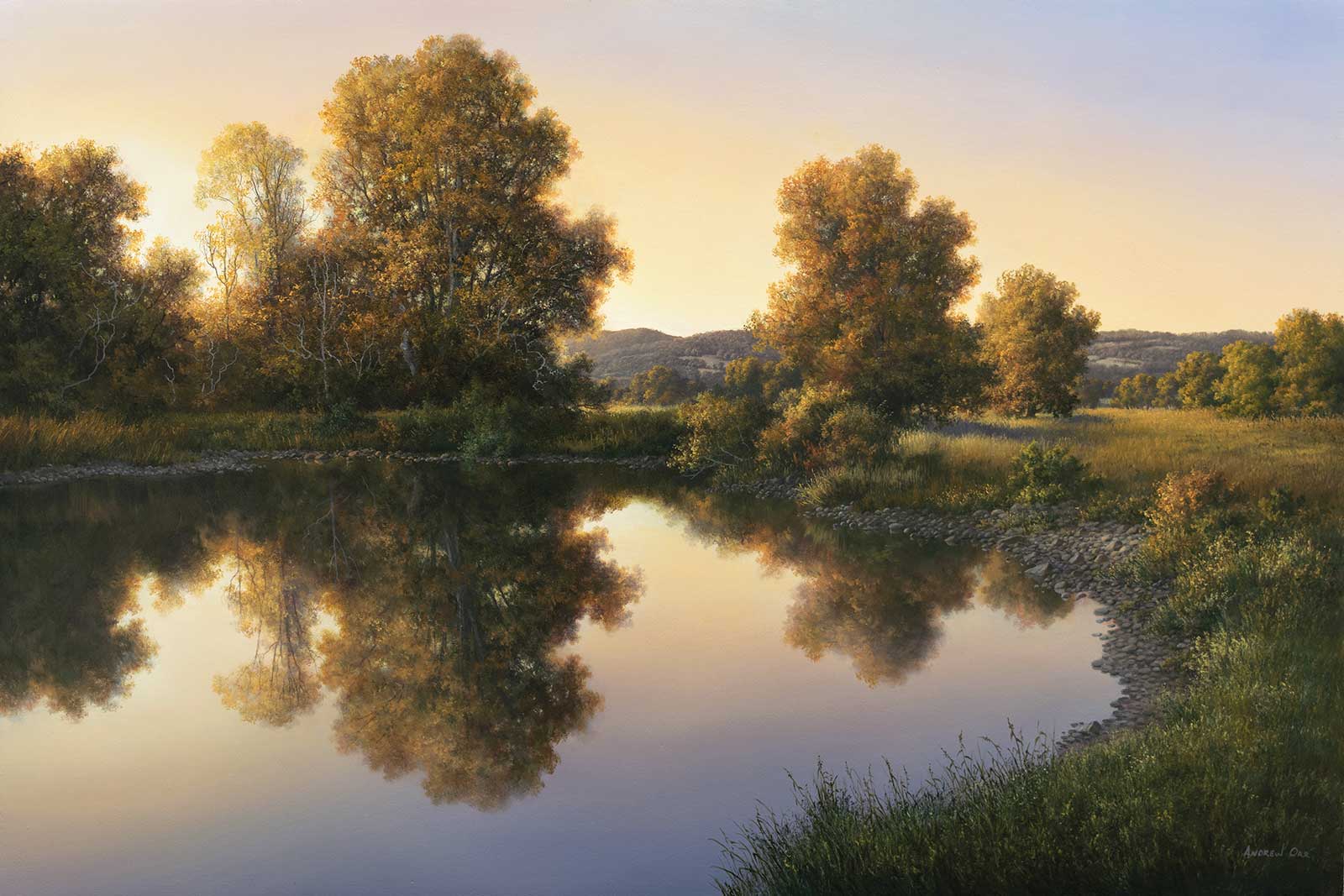
The Still Hush of Evening, oil on panel, 16 x 24” (40 x 60 cm) Each day I am fortunate to be able to look upon this scene, and throughout the isolation of Covid-19, the pond provided inspiration for several paintings. We were separated from our loved ones, but thankfully not from nature, and so my property here in northern Vermont became a constant companion. In this painting I wanted to replicate the calm of evening in early autumn using both color tonalities as well as the motionless water, which created a mirror reflection of the trees and sky.
When I happened upon this statement several years ago, the phrase “poetry of nature” resonated deeply with me. As
I began to grasp what this meant to me,
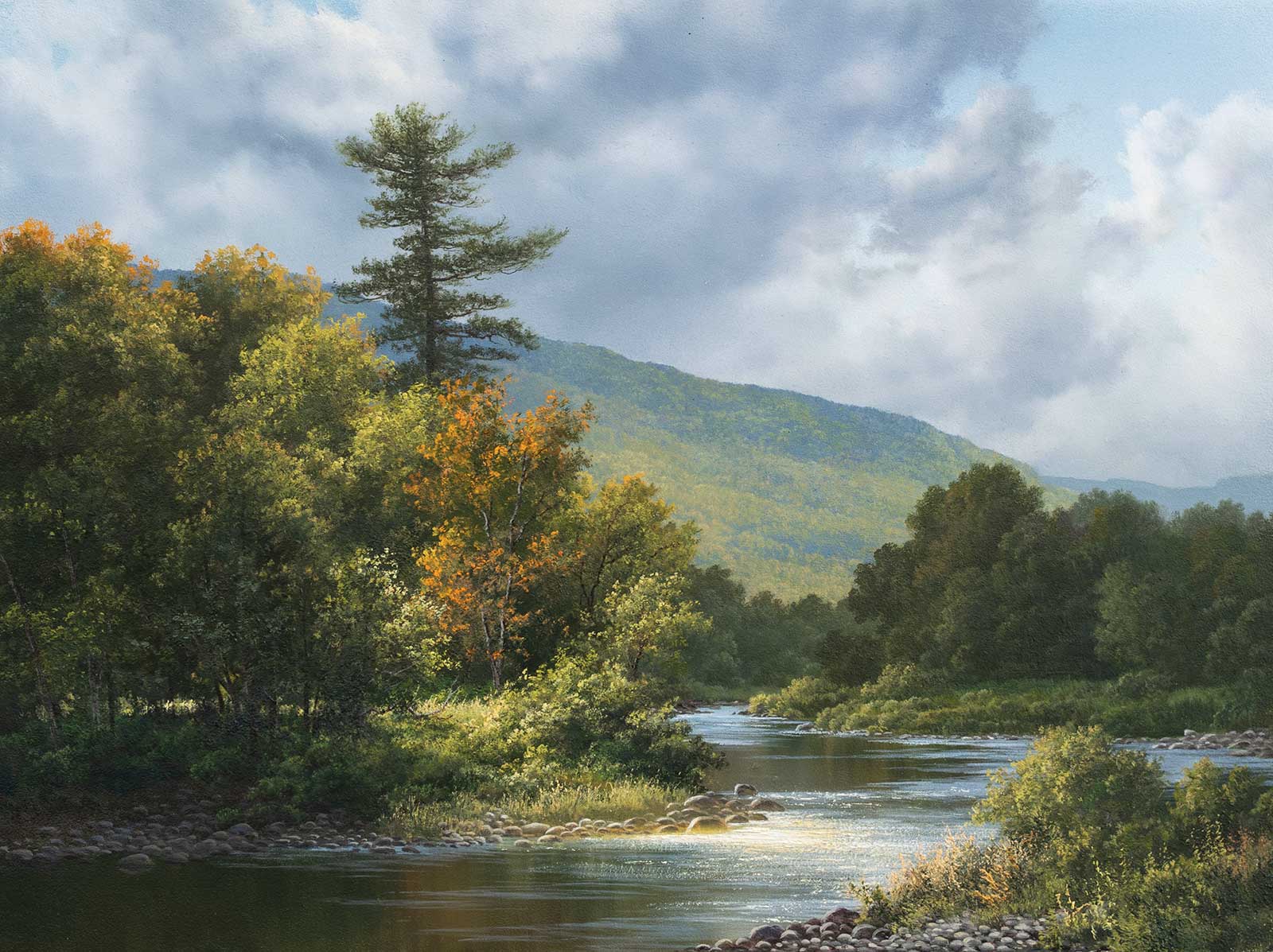
Clearing Storm on the Lamoille River, oil on panel, 9 x 12” (23 x 30 cm) For many artists who live and work in Vermont or who visit this beautiful state, there are some locations that have become iconic. This particular scene along the Lamoille River, near Ithial Falls at Johnson, Vermont, is one of them. I love the towering white pine with the ridge of the Sterling Mountains as a backdrop. The early autumn light coming through the trees after a passing storm was glorious.
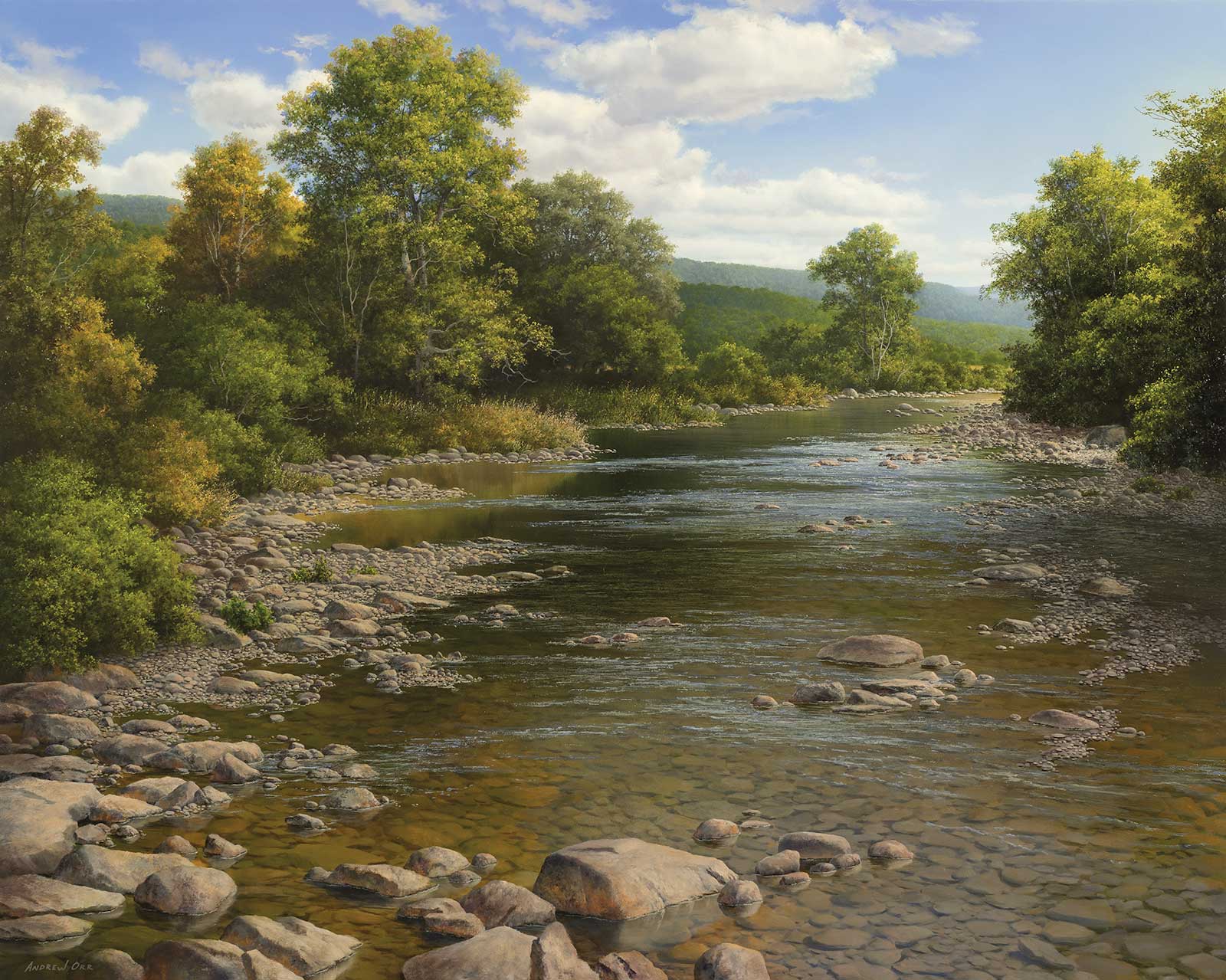
A Song of September, oil on panel, 24 x 30” (60 x 76 cm). Courtesy Rehs Contemporary Galleries. Recently completed, this piece was started almost eight years ago. Some paintings almost paint themselves; this one, not so. Not even close. I knew what I wanted to convey, but I simply could not seem to get there. The challenges were both technical and artistic. How do I handle the multiple layers and complexities of the scene? How do I maintain the level of finish in a piece larger than I often work? How do I convey a sense of deep space, movement and light? I finally made it to the end, but it is certainly not the end of this subject of the Mettawee River at North Granville, New York.
I realized this is what I am seeking in my work: to portray the elements of a scene that are beyond the subject. The miracle of light hitting the grasses, causing sparkle like diamonds, the weight of the branches of a tree, the gentle movement of water—these and many others are my perception of the “poetry of nature.”
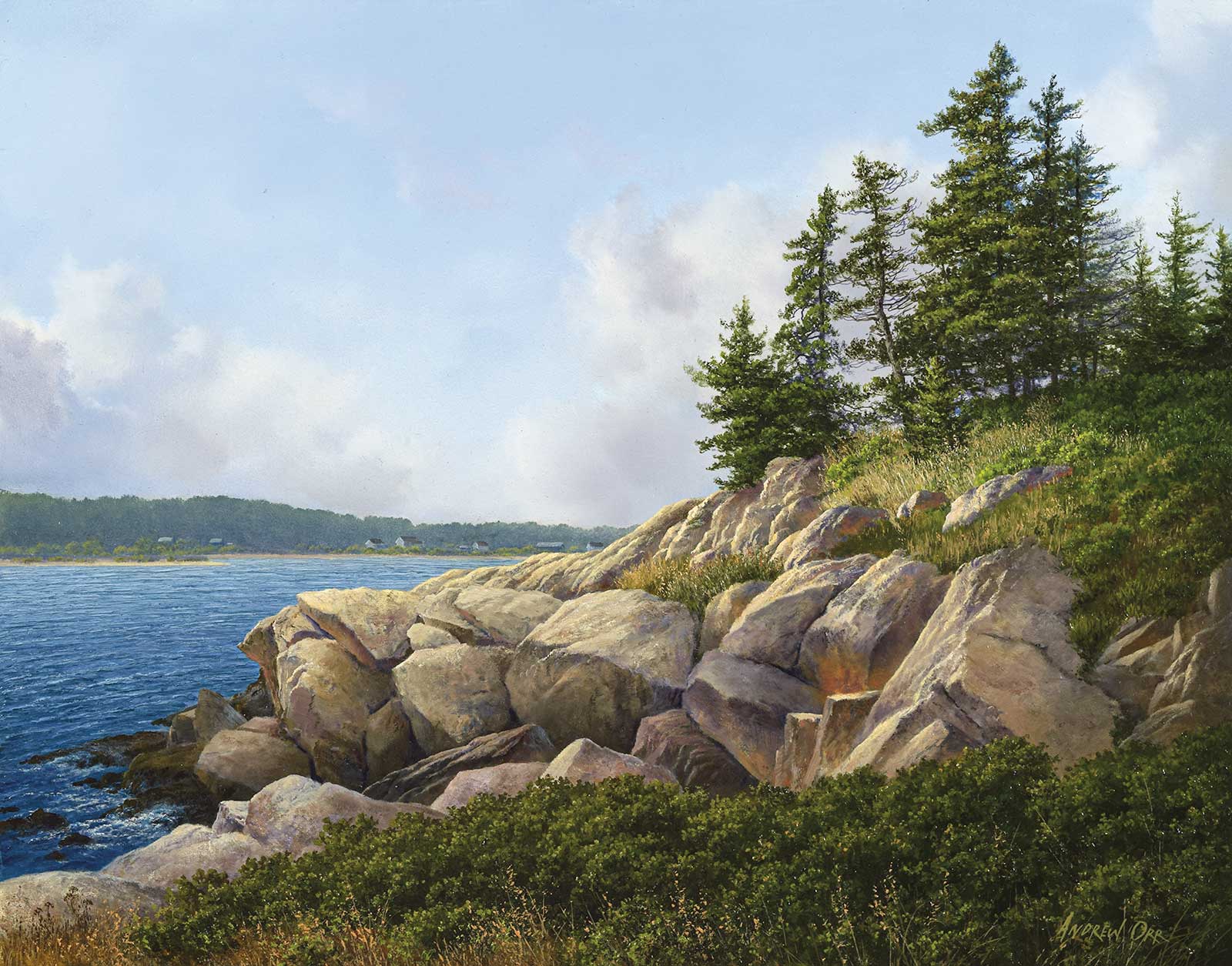
Roods Head, Lockeport, Nova Scotia, oil on panel, 11 x 14” (27 x 35 cm). Courtesy Rehs Contemporary Galleries. For several years I had the opportunity to travel to the small fishing village of Lockeport, Nova Scotia, where I spent a great deal of time painting along Crescent Beach and other areas of this gorgeous part of the world. I loved the light hitting the rocks in this scene. The edges sparkled, and the light bouncing around created lovely reflected lights, providing additional tonalities in the sun-bleached headland.
The realistic style in which I work allows me to channel the more contemplative elements of a scene. Trying to ascertain this feeling in my paintings is a never-ending quest, using all the tools of the artist at my disposal. Plein air studies, sketches, photographic references and imagination are some of the elements I use to help find, understand and replicate my interpretation of the essence of a scene. This process helps me convey the subject with an end result that will transport the viewer, for just a moment, from a world of noise to a place of calm. —
About the artist
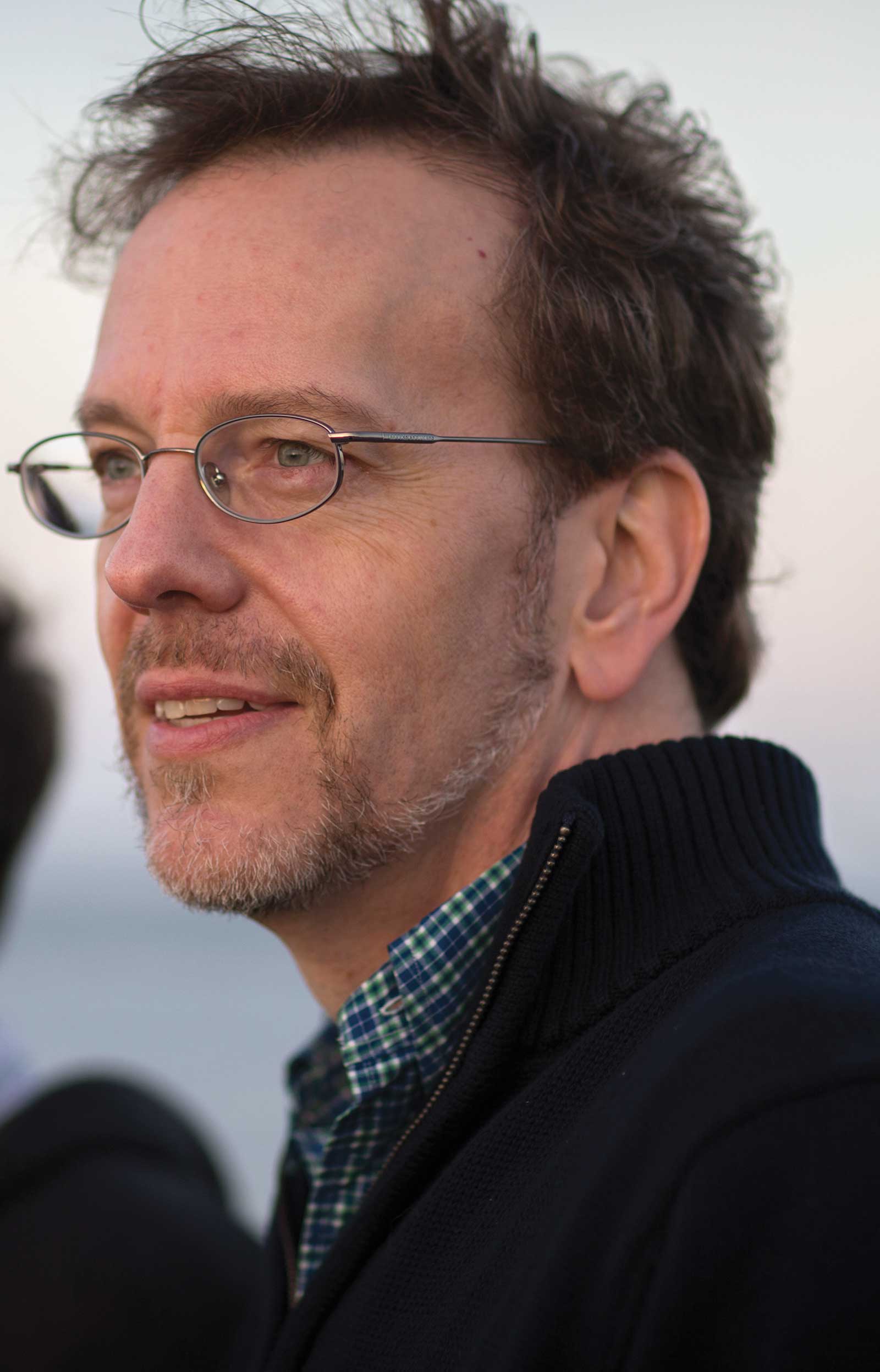 Andrew Orr
Beginning his artistic endeavors at an early age, Andrew Orr received a Bachelor of Arts in music, after which he began his studies in art with courses at the University of New Mexico and with artists Carol McIlroy, David P. Curtis and Joseph McGurl. Orr’s work has been shown in many locations in the United States and has won awards in national juried exhibitions. His work has also been featured in several one-person exhibitions.
An elected member of the Guild of Boston Artists, Orr’s awards include the Charles Movali Medal for Outstanding Painting, the Alden Bryan Prize for a Landscape awarded by the Guild, and the Alden Bryan Medal through Bryan Memorial Gallery, Vermont. Additional awards include the Barbara Carter Award for Excellence from the Oil Painters of America; he is three times the winner of the Arthur T. Hill Award for a Landscape from the Salmagundi Club; the Claude Parsons Award for a Landscape; and the Helen DeCozen Award for a Floral, both from the American Artists Professional League. In addition, his work was selected as a finalist in the Art Renewal Center’s International Salon, and in 2019, he was listed as an artist to watch by the publication Vermont Art Guide, among a number of other accolades.
Orr makes his home on the northern border of Vermont, surrounded by fields and forests, which often make up the subjects of his paintings. When he is not working in his studio, a converted horse barn, he is often found tending the vegetable garden, enjoying all the elements a bucolic life in Vermont has to offer.
Represented by
Rehs Contemporary Galleries, New York, USA rehs.com
Tilting at Windmills Gallery, Vermont, USA tilting.com
The Guild of Boston Artists, Massachusetts, USA guildofbostonartists.org
Contact at
andrew@andreworr.com
andreworr.com